
Stuck with AI?
Think of chocolate

You’re facing a problem. Your team needs to solve it and you don’t know how – every option feels like a dead end.
Now relax and think about chocolate. I’m taking you on an innovation journey. By the end of this article, you’ll have a selection of methods to apply to your actual problem. And if you’re still unsure exactly how to go about it, write to me, I’d love to hear from you.
But for now: chocolate. Schokolade in German. Handcrafted.

Imagine a small chocolate manufactory. Bean-to-bar, everything handmade. The chocolatier knows every bean, every roast, every profile. Everyone is passionate, but times are getting tougher. Cocoa beans are getting more expensive, customers are buying less. They want to explore AI but don’t really know how. There are ideas and there are conflicts.
The chocolatier asks me for help1.
First, we put together a team: community manager, chocolatier, data engineer, AI engineer, vibe coder, confiseur, shop owner. Seven people – some understand customers, some understand data, one produces the samples, one sees the reactions at the shelf. No one on the team can solve the problem alone, but together they cover everything, from the cocoa bean to the customer review.
When you put together a team to solve complex problems innovatively – make it a colorful mix. Different domains, different skills, different ages, different genders, different opinions, different levels of experience. The more different, the better. Ideally, different hierarchy levels too.
Now let’s go.
The team comes together and the task is presented. There are tensions. People clash.
We need methods2 to help us deal with this. We start. The whole thing doesn’t happen in a single day.
The team discusses passionately. Emotions run high. There is tension and resistance. Above all: contradictions!
We write them down deliberately. Reality is always messy. The point is to accept this and not argue it away. The goal is to take the contradictions seriously and give the team the chance to go deeper, to find the valuable within the paradox – but that’s not going to happen today. Good things take time.
Method: Wicked Questions
A Wicked Question makes a paradox visible – two things that are simultaneously true and seemingly contradict each other. It’s not about answers, but about seeing the tensions in which the problem moves.
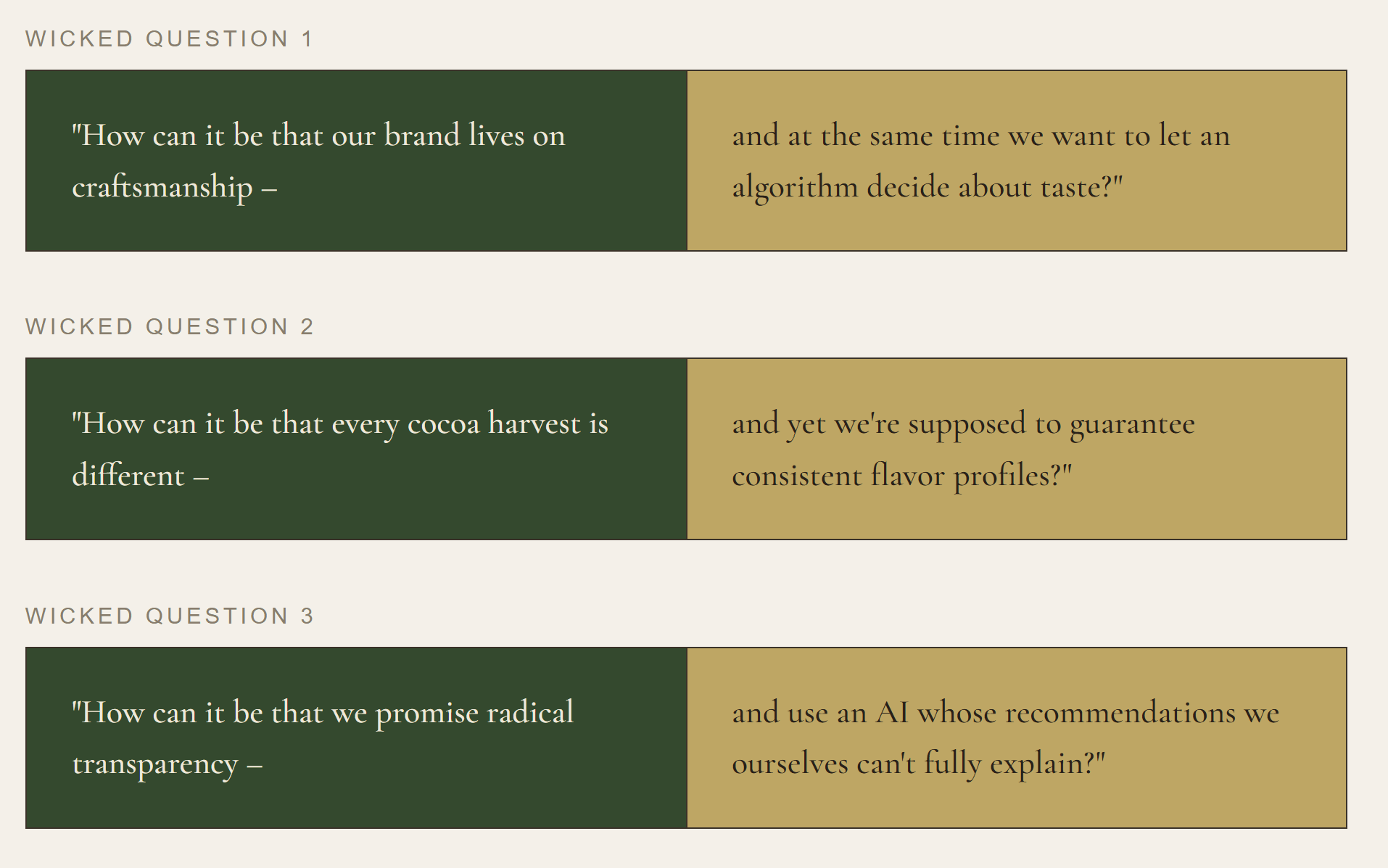
The mood in the team improves. People feel a little more understood, and a little exhausted. But nowhere near the point where the real work can begin. Everyone still has too much on their mind and too much on their desk. But they want to move forward, so where does the energy come from?
Method: Ecocycle Planning
The team places all existing activities on a figure eight – the Ecocycle. This makes visible where energy is tied up and where it could be freed.
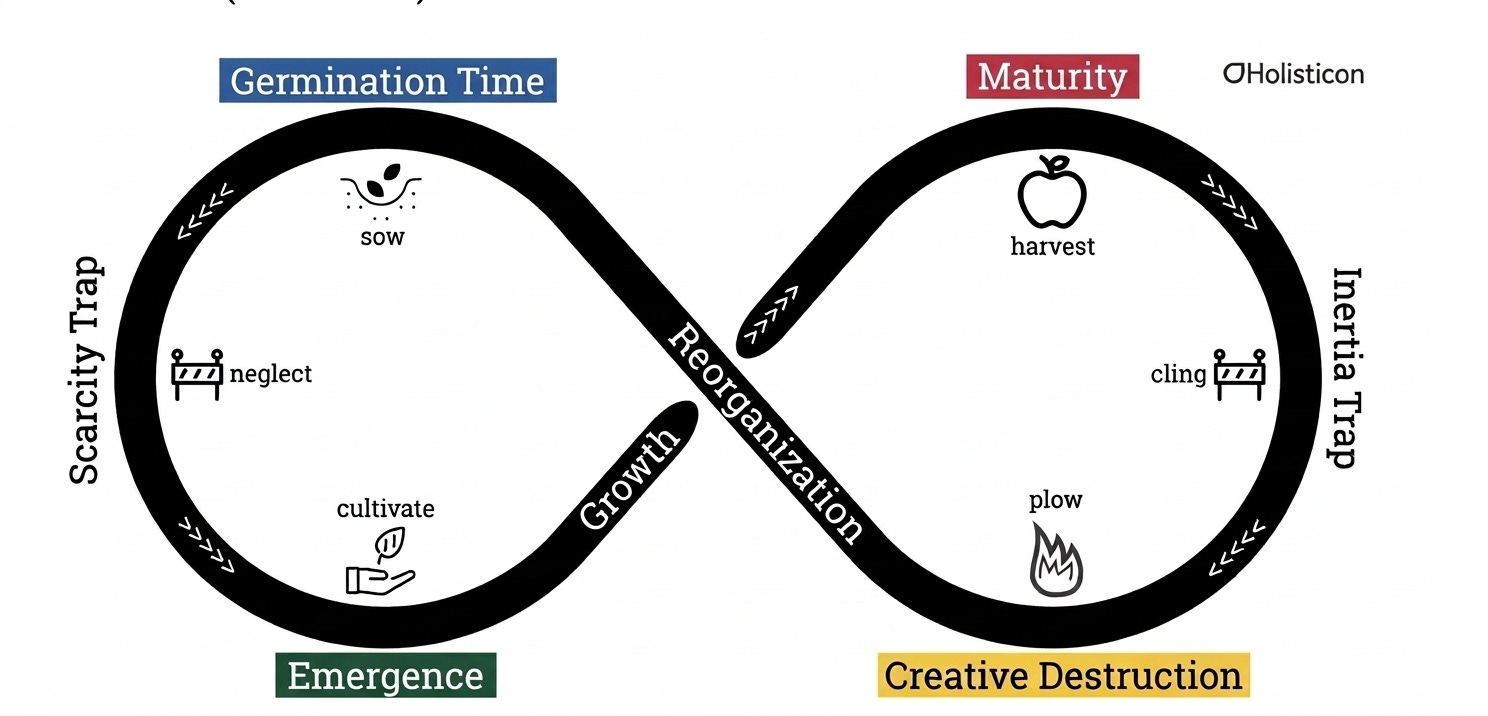
The team is amazed – seeing things laid out like this helps enormously. It opens up room for action. Everyone thinks: We don’t have to do everything the same way forever! Things have a cycle, just like in nature. Movement comes into the group, things start happening.
Until the discussions start again. One killer argument after another. But suppressing the discussion wouldn’t help either. We keep going.
We need to understand more. All the discussion points sit on different levels.
Method: Panarchy
Panarchy makes visible that every problem is embedded in a multi-level system – from micro to macro. The levels influence each other, and that’s exactly where the blind spots are.
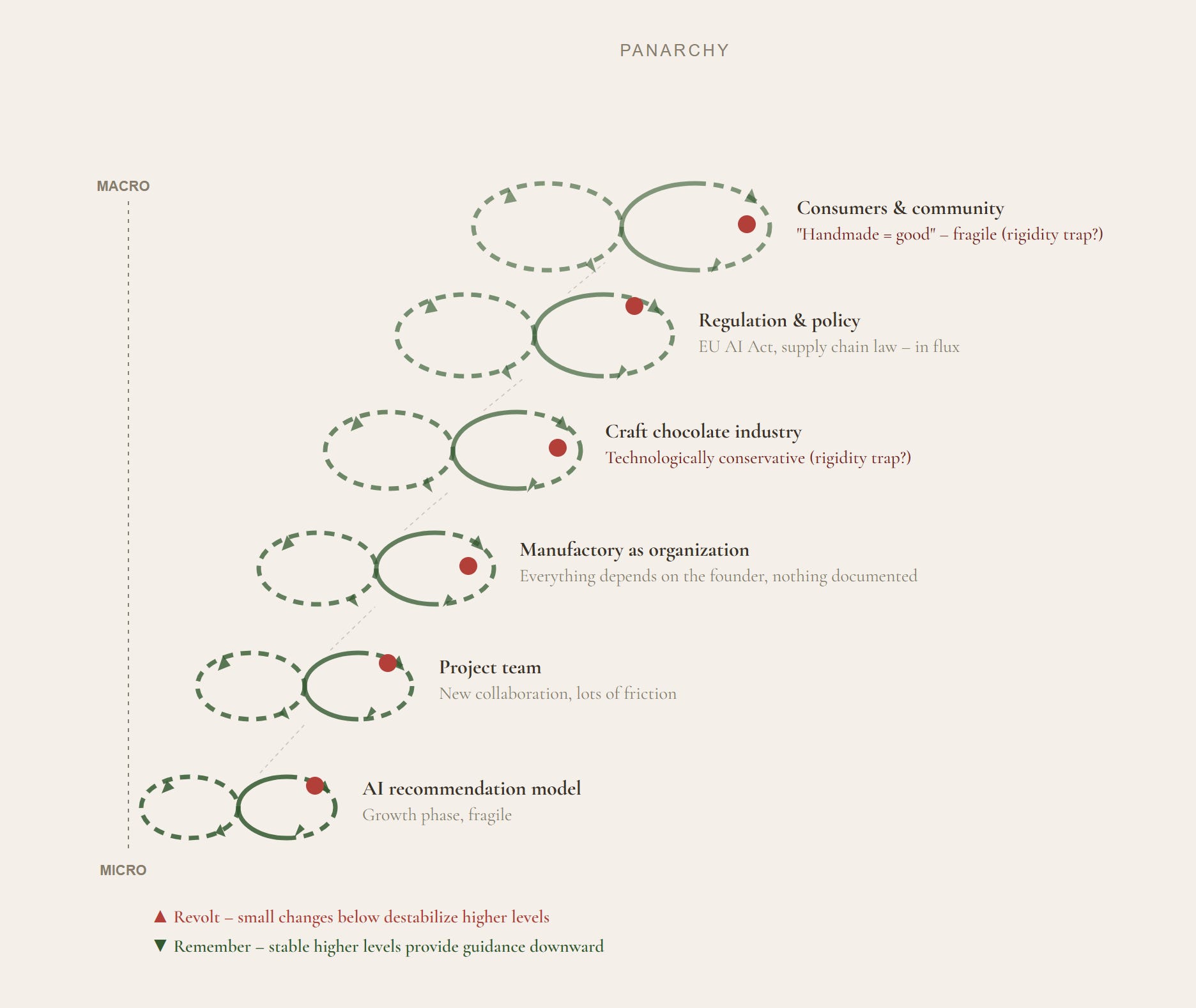
A big aha moment! A bit more clarity again – but wait: we don’t know what the future holds! Discouragement is the next feeling.
What we need now are strategies that don’t just prepare for one possible future, but for several:
Method: Critical Uncertainties
The team identifies the two uncertainties that could change everything and builds four scenarios from them. The goal is a strategy that doesn’t bet on a single future.
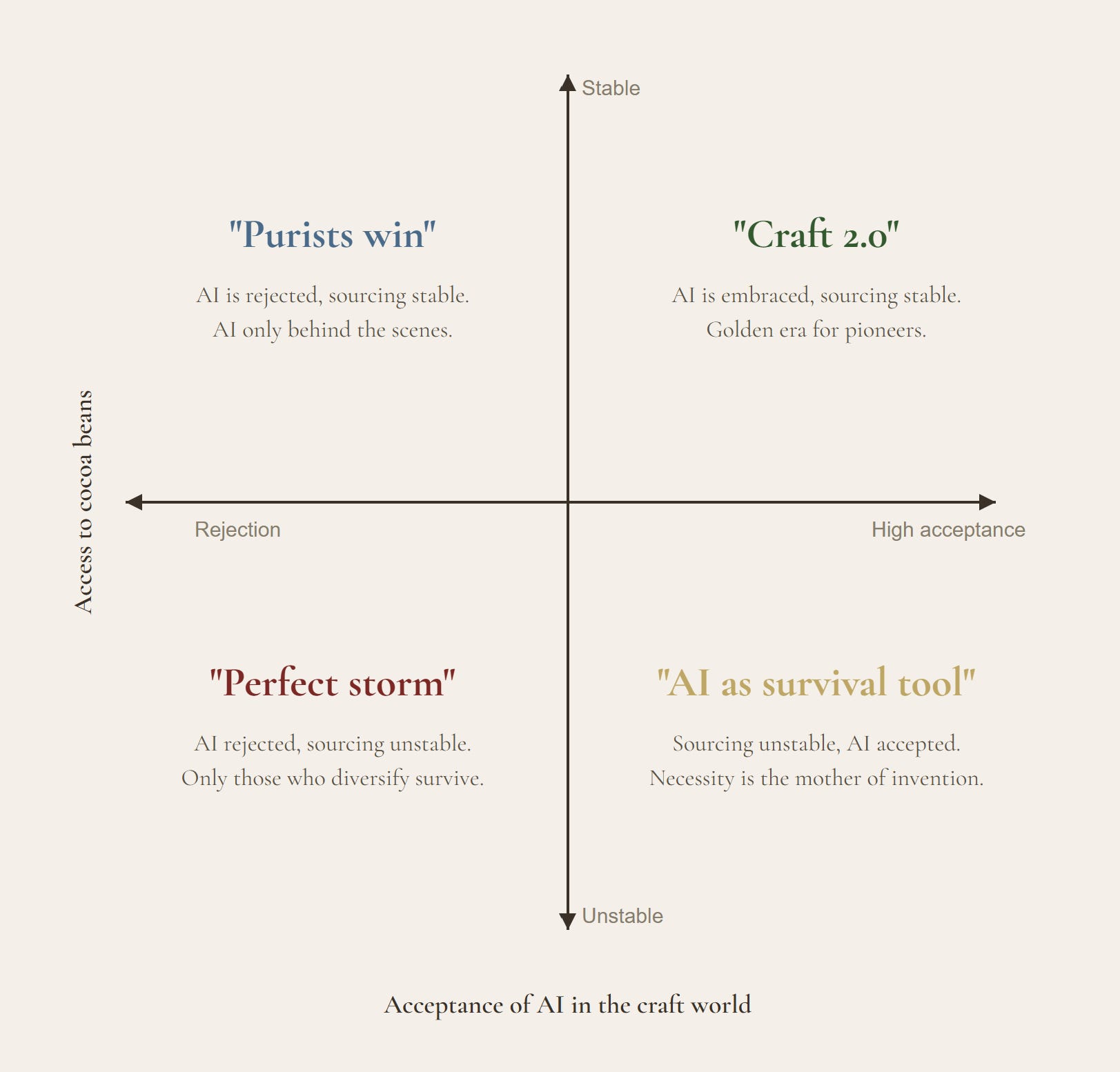
It helps! Everyone is glad things are getting realistic. The mood now swings between hope and fear of failure. How do we move forward?
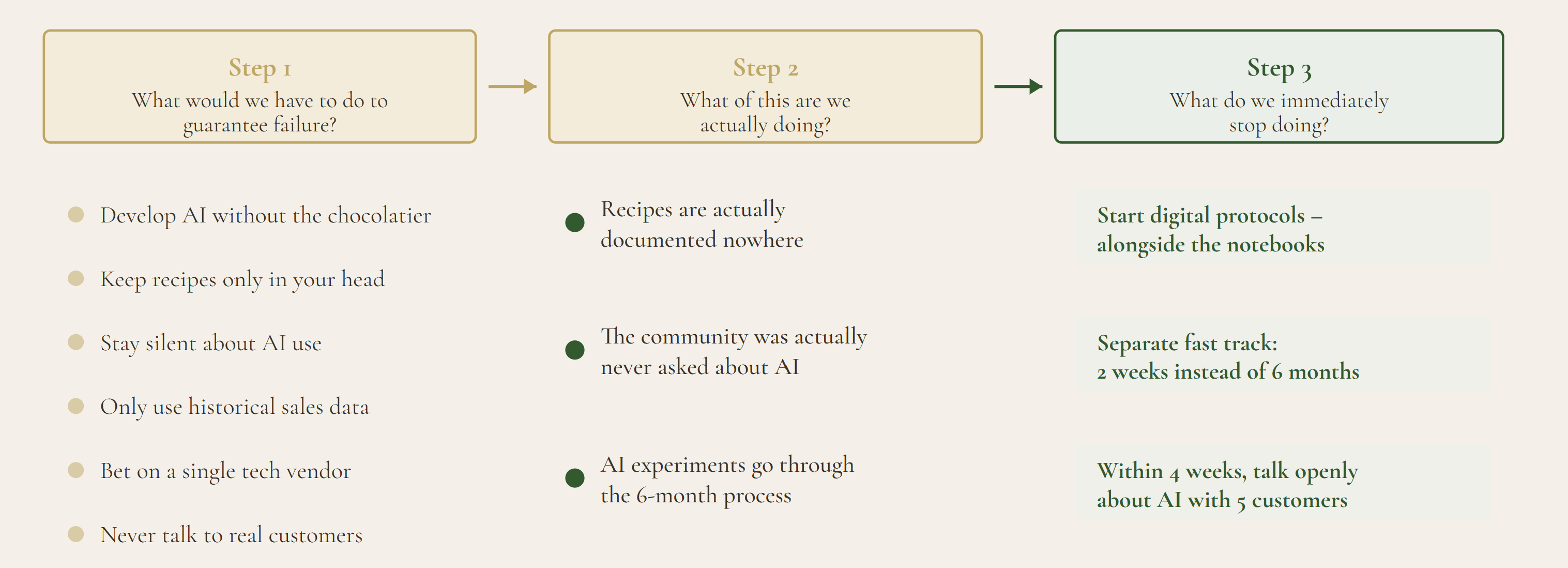
We define failure:
Method: TRIZ
TRIZ cleans house – via the detour of failure. The trick: it’s psychologically easier to say what’s guaranteed to go wrong than to look directly for your own mistakes.
Ok, the worst part is over! Everyone wants to finally get started, there’s enough energy now.
We begin with:
Design Thinking
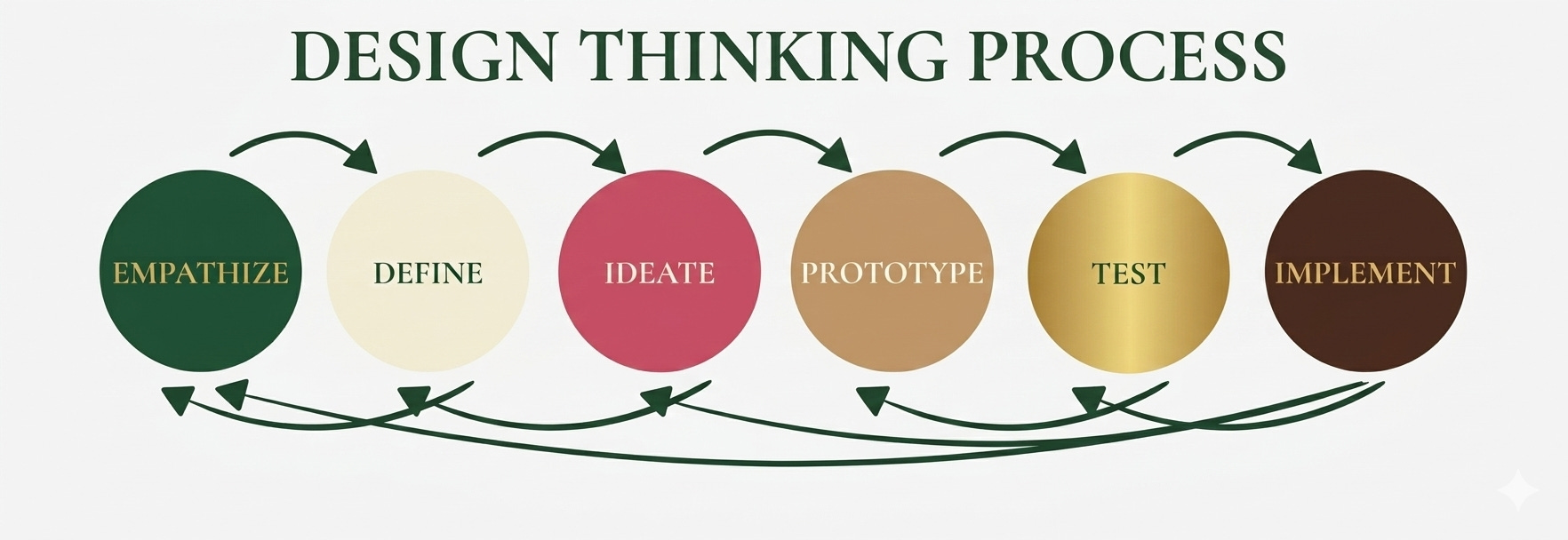
Now we build and test – not into the void, but on the foundation of the five previous methods. Design Thinking is not a linear process, the team jumps back, discards, rebuilds.
First, understand real chocolate lovers – not what we assume they want, but what they actually care about. Then, formulate the problem sharply: the manufactory is fighting for survival, needs to win the customer and be efficient at the same time. Generate solution ideas. Quickly build something tangible. Test it with real users and feed the feedback back into the model. This takes days to weeks.
Is that it and everything will be fine? The answer is a clear: No.
You’ve put the team together, you’ve done the workshops, you’re in the design thinking process or something similar – and feelings go up and down.
In all the teams I’ve been part of, I saw similar patterns.
Imagine an inventor building a device. Tinkering away on his own. He takes something apart, puts something together, then takes it apart again, puts it together differently. It goes back and forth constantly. He’s euphoric in between, then desperate again. Phases of confusion come, and he goes in circles. He questions the entire mission, wants to throw it all away and yet can’t let go. Days come when he feels paralyzed. Days come full of hyperactivity. Suddenly he knows it! Then again the simplest things escape him – back to square one! Until unexpectedly the breakthrough comes.
It’s not a linear process. It’s highly emotional.
The good news: my experience is that, the more loops the team goes through, the more confusion there is in between, the more drafts get discarded – the better the result.
Maybe you’re thinking now: ok, what we’re doing isn’t really innovation. And I’m telling you: even if you’re not inventing anything new, the moment you’re facing tasks where the path to the solution isn’t clearly known, where maybe not even the target is clear, you’re touching the sphere of innovation.
Step in and don’t be afraid. Even if it’s hard.
The moment the target is unclear and the path to get there even more so, fears set in. Our society has also become more and more anxious over the past decades. I’ll write a separate article about that.
Can you allow this process, or do you panic and start managing?
Our work often moves in the intangible. But it closely resembles what the inventor does: taking apart and putting back together, being confused and starting over again.
Are you ready for this journey?
© 2026 Bianca J. Schulz. All rights reserved.
The example of the chocolatier is imaginary
The methods are documented here https://digitaleneuordnung.de/blog/design-thinking-methode and here https://liberatingstructures.de/
Really liked the framing, especially the focus on embracing uncertainty instead of rushing into solutions. One thing I’ve seen in practice though is that the biggest challenge isn’t choosing the right method, but maintaining clarity and decision ownership as complexity grows. Without that, even the best frameworks tend to turn into endless loops.
Great example indeed, thanks for the work you put in.
One critical piece is missing in your example - owner / team leader / moderator / decision maker whatever we call it.
The execution plan is cross-functional and there needs to be the ultimate owner to this exercise.
And I am sure this is where you are capable of doing!